For years, “keywords” were the star of the show in digital strategy. You picked the right phrases, optimized your pages, and hoped to land on page one of Google. That world isn’t gone, but it has changed irrevocably. In an AI-driven search environment, keywords are no longer the whole story; they’re the starting point for something much bigger: understanding how generative AI interprets questions, selects sources, and trusts voices in food and agriculture.
This article builds on my earlier pieces, How Generative AI Is Transforming Search Part 1, Part 2: Integrating Traditional and AI-Driven KPIs, and The Real Game Changers in AI-Driven Search for Agriculture to explore why keywords still matter, what AI prompt analysis is, and how topical authority and the pillar–cluster model can give Canadian agriculture a strategic edge.
Why Keywords Still Matter
Generative AI tools don’t ignore keywords; they use them differently. Keywords signal intent: what a person is really trying to learn when they ask, “Is Canadian beef sustainable?” or “Are ultra-processed foods bad for my kids?
In practice, that means:
- You still need to understand the exact words Canadians use when they search or chat with AI.
- Those phrases should be reflected in your pillars (big topic pages), clusters (supporting content), titles, and headings.
- But instead of chasing dozens of isolated keywords, you group them into topic families that show depth and expertise across an entire subject.
In other words, keywords are like seeds. On their own, they’re small. Planted into a deliberate content structure, they grow into something AI can recognize as topical authority.
What Is AI Prompt Analysis?
If SEO used to be about “what people type into Google,” AI search is about “what people ask and how AI answers.” AI prompt analysis is the practice of studying:
- The questions people ask AI tools (the prompts)
- The intent behind those questions (information, reassurance, comparison, “what should I do?”)
- The responses AI generates, structure, and recommended actions
- Which sources and brands are cited (or not) in those answers
Done well, AI prompt analysis helps you see:
- Where your brand or sector is already part of the conversation
- Where competitors are showing up and you are not
- Which topics AI thinks are relevant for “Canadian farming,” “healthy recipes,” or “sustainable protein”
From there, you can adjust your content, structure, and partnerships so that when someone asks an AI tool a question about food or farming, your perspective has a much better chance of being included. That’s the new face of Generative Engine Optimization (GEO).
Topical Authority: From “One Page” to “Best Answer”
Search engines and generative AI are shifting from “Who has the best page?” to “Who is the best source on this topic?” That is topical authority.
Topical authority is built when you:
- Cover a subject in depth, from definitions and how‑tos to comparisons, myths, and advanced questions.
- Organize content so it’s easy for both humans and machines to see how all the pieces fit together.
- Maintain accuracy, update content regularly, and earn references from other credible sites.
A single “hero” article about canola, dairy, pulses, or beef, no matter how strong, is no longer enough. AI is looking for a body of work that demonstrates expertise, consistency, and trustworthiness across an entire topic area.
The Pillar–Cluster Model: How You Show AI Your Expertise
One of the clearest ways to signal topical authority is the pillar–cluster model (sometimes called hub-and-spoke). In this approach:
- A pillar page gives a comprehensive overview of a big topic (for example, “Canadian Canola: From Field to Kitchen”).
- Cluster pages go deeper on subtopics (e.g., “How Canola Is Grown in Canada,” “Canola and Heart Health,” “Cooking Techniques with Canola Oil,” “Debunking Myths About Seed Oils”).
Strong internal linking connects every cluster back to the pillar and across related clusters.
This structure tells AI systems three things:
- You understand the topic in depth.
- You’ve organized content in a way that mirrors how people actually ask questions.
- Users can move easily from one logical question to the next—something AI tools reward because it improves the overall experience.
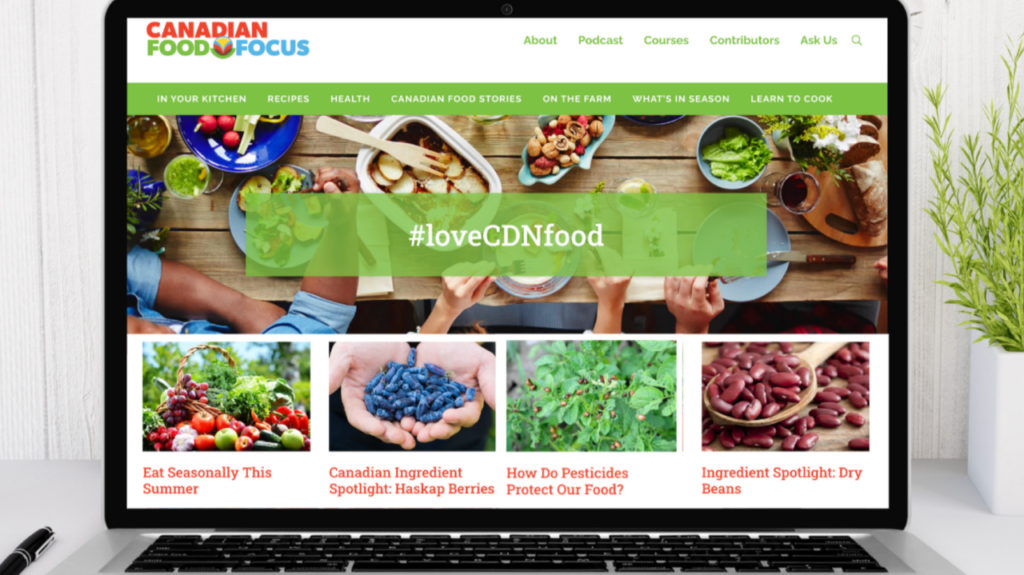
For Canadian Food Focus, this model aligns perfectly with our mandate: to help Canadians move from “What is this food?” to “How do I use it?” to “What does it mean for my health, my family, and Canadian farmers?”
Why Commodity Groups Shouldn’t Go It Alone
Here’s the hard truth: even the best single-commodity website will struggle to match the authority score, topical breadth, and AI visibility of a collaborative, cross-commodity platform.
Recent Generative AI analysis shows that Canadian Food Focus:
- Ranks among the top consumer-focused food and agriculture sites in Canada for authority score
- Sits second only to Canada.ca for AI citations in Canadian food and farming
- Consistently earns leading positive sentiment ratings, reflecting public trust in our content and tone
That matters because authority score and sentiment are exactly the kinds of signals AI tools use when choosing which sources to cite. A commodity organization working alone is like one boat trying to raise the ocean level. Partnering with a platform like Canadian Food Focus is more like joining a fleet when the water rises; everyone floats higher.
By collaborating with CFF on an AI strategy, a single-commodity group can:
- Plug into an existing pillar–cluster ecosystem that already ranks and is cited by AI.
- Ensure its commodity is represented within broader food, nutrition, recipe, and farming conversations that Canadians are actually having.
- Benefit from shared prompt analysis, topical planning, and GEO/AEO best practices that no single organization has the capacity to develop on its own.
In an era where AI decides who speaks for agriculture at the moment of searching, the smartest move for a commodity group is not just to “optimize its own site,” but to work with Canadian Food Focus to shape the whole conversation. Together, we can make sure that when Canadians ask AI about their food, they hear from all of us—clearly, credibly, and with the full strength of Canadian agriculture behind the answer.

Dorothy Long
Home Economist and Executive Director, Canadian Food Focus
Dorothy Long is a passionate advocate for Canadian food and farming with over 25 years of experience connecting consumers to agriculture. A Saskatchewan farm girl turned home economist, Dorothy has developed national agrifood marketing campaigns, organized farm tours for food influencers, served as the Executive Director of Cuisine Canada and co-authored the Discover the Pulse Potential cookbook. As Managing Director of Canadian Food Focus, she leads efforts to improve food literacy and public trust in Canadian agriculture and food. In 2023, Dorothy was inducted into the Saskatchewan Agriculture Hall of Fame for her contributions to the industry.
 9 Ways to Save Money on Groceries